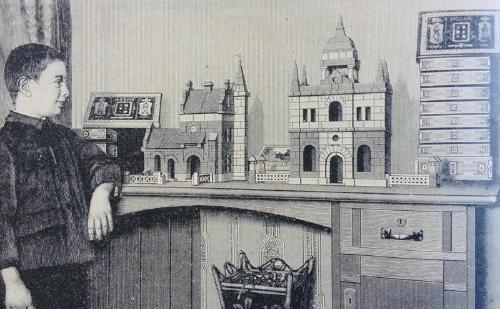
Apart from specific skills, catalogues and manuals of construction toys instilled various ideas. For example, Anker-Richter pattern sheets typically included churches. This could reassure parents that children were not only constructive but also religious – ‘a winning combination for learning’ in the late nineteenth century. At the same time, distant cultures and religions were included in the repertory of construction toys and their illustrated catalogues. Buildings from faraway lands and other ‘exotic’ structures were fascinating and attractive. A set of wooden blocks entitled Orient, by S.F. Fischer, Oberseiffenbach (Germany), ca. 1900, could be used to make a mosque. The 1899 Exposition Universelle in Paris was the occasion when a construction toy entitled Maisons Africaines (African Houses) was produced. World’s Fairs, kick-started with the groundbreaking event of the Great Exhibition in London in 1851, were not only events where the latest technology was showcased, but also where the ‘Other’ could be discovered. Objects presented in international fairs brought remote lands and cultures closer to the European public. International exhibitions enjoyed huge success and had a lasting impact on children’s imagination in the second half of the nineteenth century. Nevertheless, displays were full of clichés.