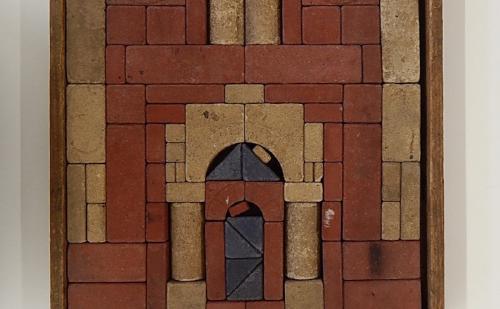
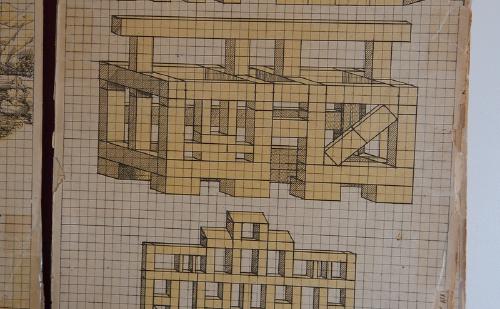
From the beginning of their development, construction sets had been closely connected to a range of discourses in various domains, including education, technology, and gender. A powerful illustration of the perceived significance of construction toys in the nineteenth century is presented by a detail of the 1861 painting Blüte der Kunst in München (Flowering of Art in Munich) by Eugen Napoleon Neureuther (1806–1882), a work now in the collection of the Sammlung Schack in Munich. The painting was inspired by Raphael’s The School of Athens (1509), and was meant to glorify the Munich art scene during the reign of Ludwig I by depicting a number of distinguished local personalities of that period. A detail of the painting on the lower left corner shows a boy sitting on the floor and constructing a building with blocks. The well-dressed child, presumably belonging to an upper-class family, is absorbed in solitary play. Although this is an idealised depiction reflecting the views of adults rather than children, it does highlight the foundational role of construction toys in the cultural pantheon and their potential to shape future generations. The painting demonstrates that, at least with reference to educational construction toys, the formerly perceived unimportance of play as infantile activity had lost credibility. These toys were taken very seriously by the adults who created them to achieve important goals related to their children’s upbringing.