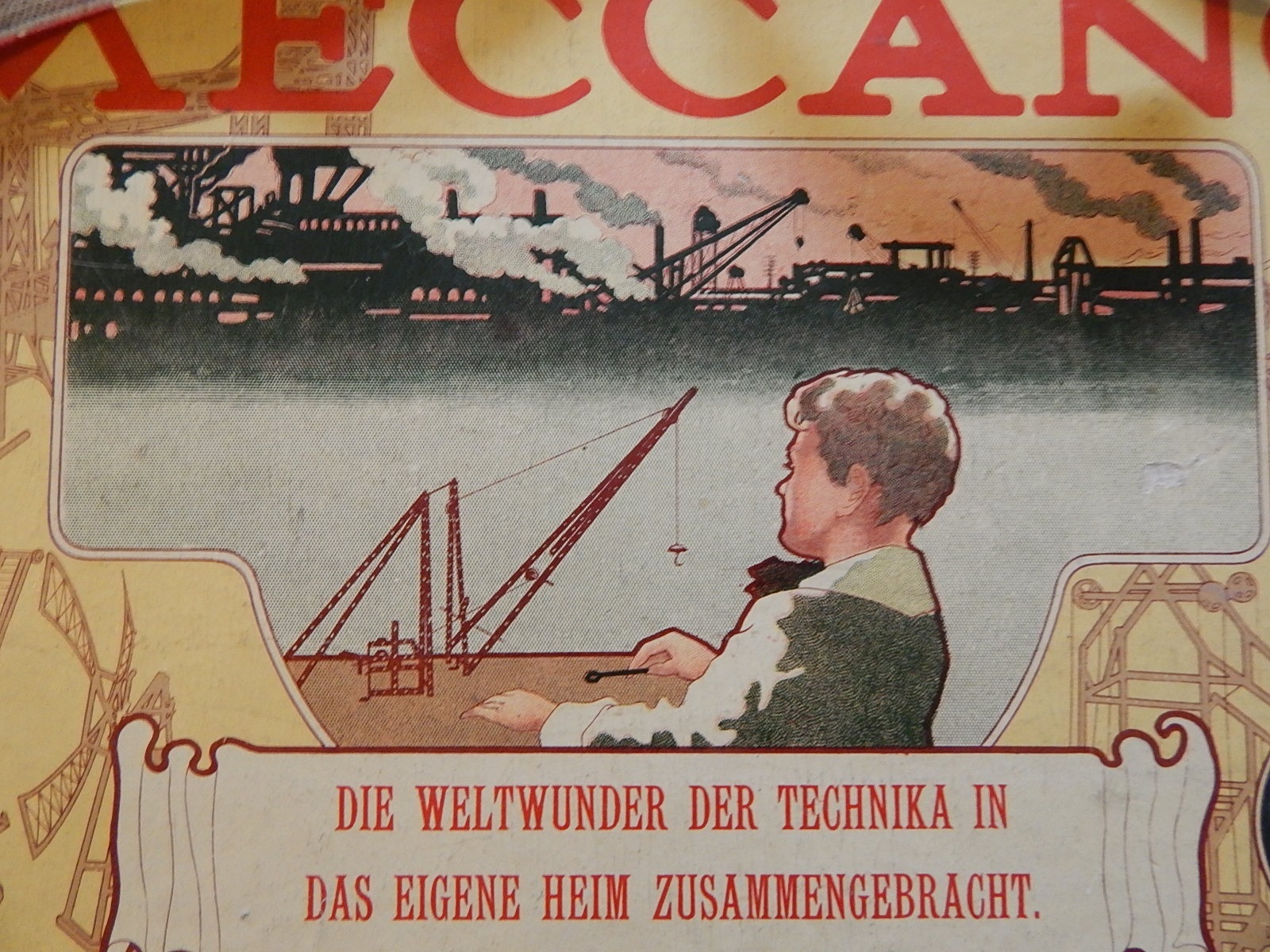
Consider the illustration from the cover of an early twentieth-century British Meccano metal-set box for the German market. It shows an elegantly dressed boy sitting in front of a table and constructing a metal crane, his back turned to the viewer of the image. In the background that the boy faces, there is an imposing industrial landscape of factories, cranes, chimneys, and smoke. The caption reads: ‘The world wonders of technology brought together in your own home’. The boy is situated in a neutral and somehow surreal space, neither inside nor outside. His face is not shown, thus allowing us only to imagine his expression and speculate about his feelings. Is he inspired by the view that exemplifies technological potential? Is he dreaming of his own future as an engineer? Or is he perhaps overwhelmed by the complexity of the world lying ahead of him? The picture is ambivalent and open to interpretation; it certainly does not reflect the jauntiness so often associated with childhood. It rather represents adult emotions towards the unknown – the uncertain, collective future – symbolised by children.