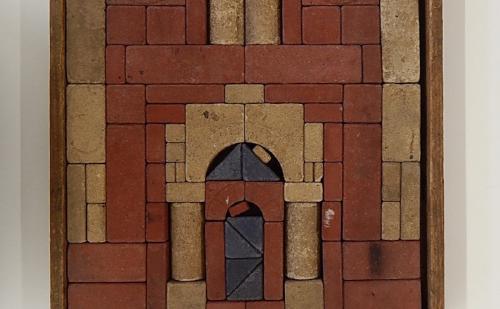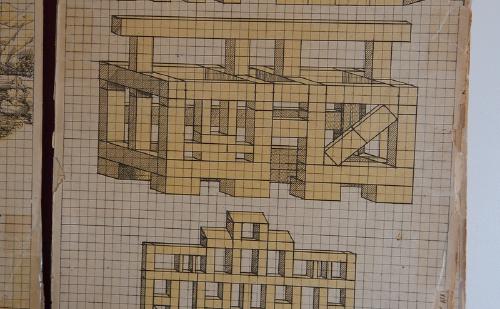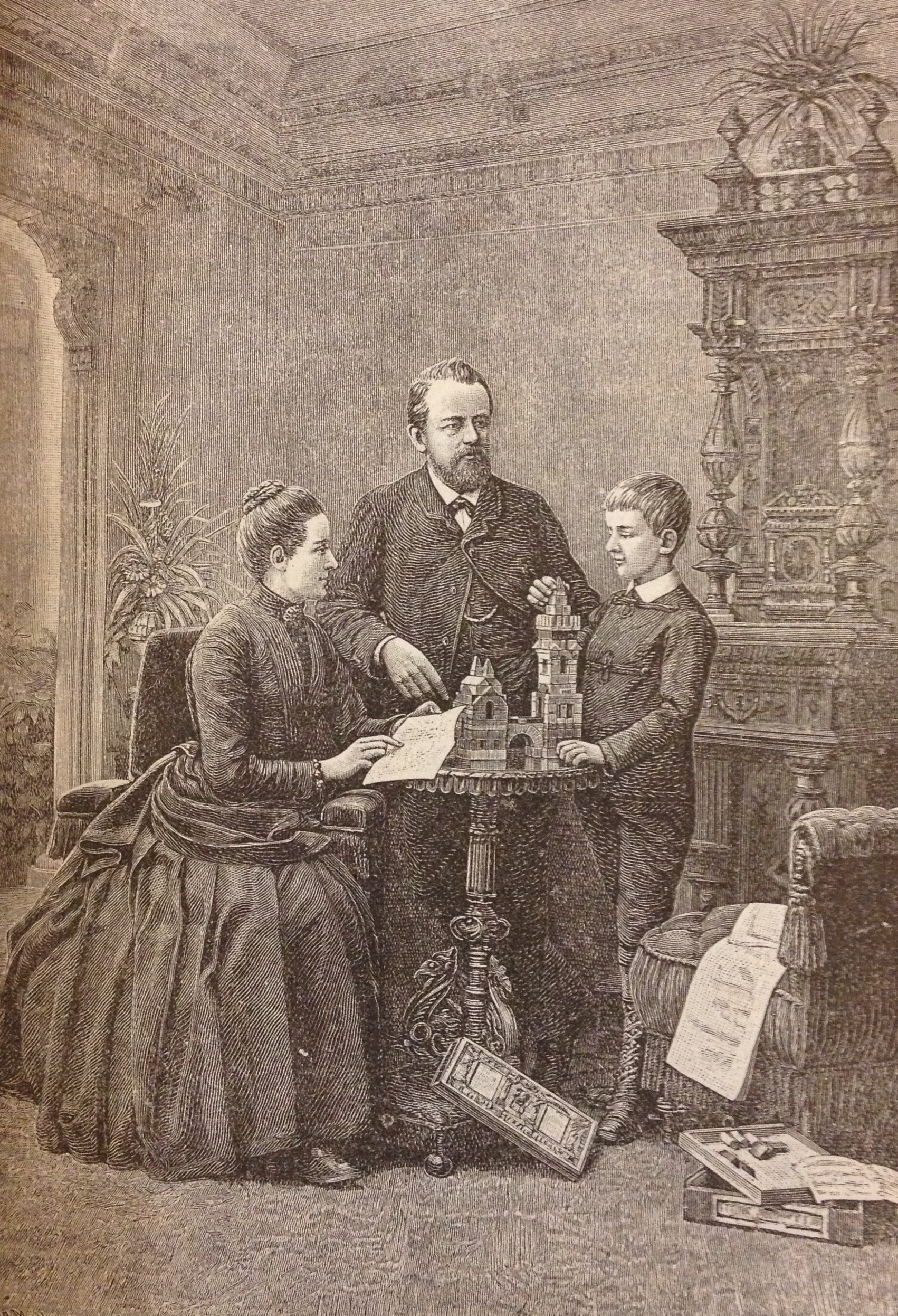
A late nineteenth-century promotional leaflet of the German Anker-Richter company, the world market leader in construction sets during that period, shows a remarkable family scene set in a meticulously decorated bourgeois living-room. A well-dressed boy is standing in front of a small table, adding the last touches to a building made of Anker-Richter blocks. He is concentrated and serious, as if performing an important homework. The mother is sitting opposite to him, looking at him intensely, while her finger points at a page of the play manual. She appears to be supervising him, making sure that he follows the instructions correctly. The father is standing between them, apparently adding his authority to the scene, without direct involvement. The packaging of the blocks and relevant manuals are lying on an armchair and on the floor, providing the only casual detail in a setting otherwise carefully structured, exuding an atmosphere of discipline and order that is far from playful or pleasurable. The illustration was actually based on a photograph sent by the pictured father himself, Mr. Robert Roesler of Stockholm, who stated: [The Anker-Richter box] ‘has caused great enjoyment not only to my little son but also to my wife and myself. […] No other game has given my boy so much pleasure […] He is never tired of it, he commences building again and again and is already to some extent skilled in this art’.i The description is rather at odds with the somber atmosphere of the picture.