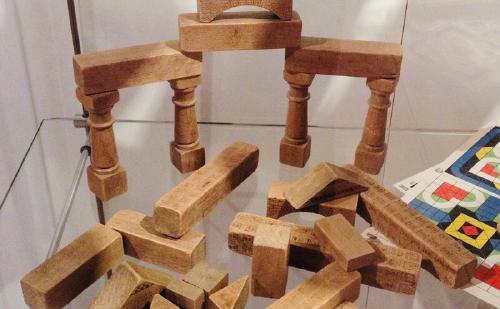
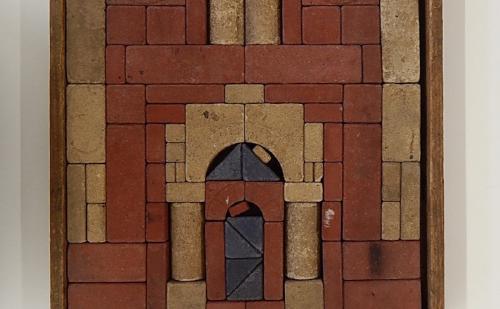
The emphasis of construction toys on geometrical and structural features is also connected to the importance of grid structures. A grid is a pattern or structure made of horizontal and vertical lines crossing each other to form squares. The grid has been present in Western civilisation already since the Palaeolithic times; it establishes a measuring relation to the world and is a sign of power. Gradually, the grid became the dominant form for the structuring of inhabitable space, indeed for the domestication of space. Specifically in cartography, the grid became the main convention for the representation and construction of reality, a way of providing a certain measure of security. In educational contexts, this logic was expressed visually on the two dimensions through the omnipresent grid: on the layout of spaces, on table surfaces, in diagrams and textbooks, as well as in construction toy manuals. The gridded paper or surface was a powerful, normative device, establishing a geometrical, rhythmic framework that was gradually internalised by children.